Here's a staggering number for you: fewer than 1% of the ocean floor has been explored in high resolution. We've mapped the surface of Mars in more detail than the seabed right here on Earth. So when a team of researchers pulls something utterly alien out of the deep — something that looks like it should've gone extinct alongside the dinosaurs — I sit up and pay attention. That's exactly what happened recently, and the phrase getting thrown around is "living fossil." I've found that label gets tossed carelessly, but this time? It might actually earn it.
The Deep-Sea Discovery That Broke the Paleontology Internet
Picture a creature that looks like a cross between a shrimp, a horseshoe crab, and a sci-fi prop — segmented, armored, and built like it was designed in 1997 for a movie that never got made. That's roughly the vibe of the newly described deep-sea species scientists pulled from the abyssal zone, thousands of meters below the surface where sunlight is a rumor and pressure would crush a submarine.
Here's what most people miss: the deep ocean is the closest thing we have to a time capsule. Creatures down there evolve slowly because their environment barely changes. No seasons, no storms, just cold, dark stability for millions of years. That's why the deep-sea species they've discovered carries anatomical features scientists previously only knew from fossils — lineages thought to have vanished hundreds of millions of years ago.

Let's be honest, though — "living fossil" is a loaded term. It's not that the animal stopped evolving; it's that its body plan has stayed remarkably conservative. Evolutionary biologists actually get a little twitchy when journalists reach for the phrase. But in this case, the team's morphological analysis found structures matching specimens dated to well over 100 million years back. That's not a marketing gimmick. That's a genuine window into the past.
Why "Living Fossil" Is Both Accurate and Misleading
I want to push back on the hype for a second, because the science deserves nuance. A "living fossil" doesn't mean the creature is a literal dinosaur-era relic that time forgot. What it means is that the lineage has retained ancestral traits that most related species have since lost. Think coelacanths, horseshoe crabs, ginkgo trees. They're not frozen in amber — they're still evolving, just in ways that preserve the original blueprint.
So why does the label matter? Because it gives us a living specimen to study instead of a rock. You can't dissect a fossil's soft tissue. You can't sequence a fossil's genome (not yet, anyway). But a living deep-sea species? That's a Rosetta Stone for understanding how ancient life actually functioned. Here's what the discovery gives researchers:
- Soft-tissue data that fossils simply can't preserve
- Genomic sequencing to trace how the lineage diverged from modern relatives
- Behavioral observations of how an "ancient" body plan operates in real time
- A calibration point for molecular clocks used to date evolutionary events
That last one is huge. Molecular clocks are notoriously finicky — they're the reason two studies can date the same divergence event millions of years apart. A living calibration point tightens the whole model.
The Real Reason Scientists Are Freaking Out
Okay, here's the part that genuinely excites me as someone who reads too many paleontology papers on weekends. This discovery doesn't just give us a cool animal — it forces us to rethink when certain evolutionary innovations actually appeared. If this creature's anatomy matches fossils from the Paleozoic, and it's alive and thriving today, then either the fossil record has been underestimating the persistence of these lineages, or our timeline for when they "went extinct" was flat wrong.
Scientists love a good paradigm shake-up. This is one.
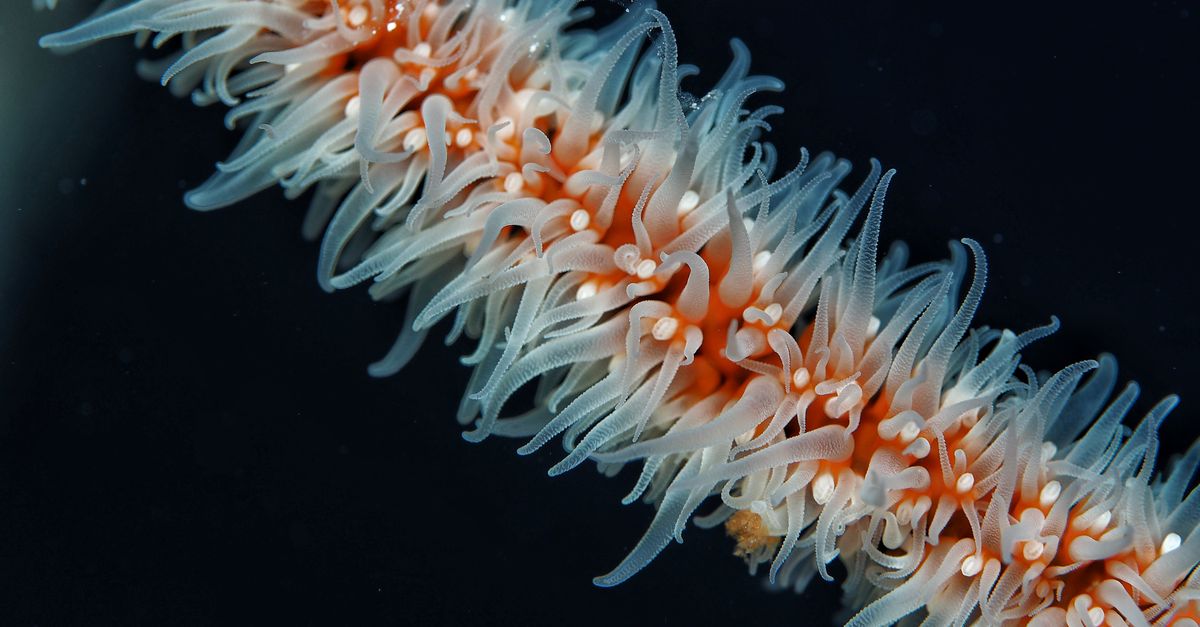
And there's a bigger implication lurking underneath. The deep ocean is under enormous pressure — literally and figuratively. Deep-sea mining, bottom trawling, and climate-driven changes to ocean chemistry are threatening habitats we've barely catalogued. Finding a "living fossil" down there is a reminder that we're potentially destroying evolutionary history we haven't even documented yet. You can't protect what you don't know exists.
I've found that discoveries like this tend to do two things at once: they humble us and they galvanize us. Humbling because, again, less than 1% of the seafloor is mapped. Galvanizing because every new deep-sea species is a data point in the argument for exploration funding.
What the "Living Fossil" Label Means for Ocean Conservation
Let me put my cards on the table: I think the "living fossil" framing, despite its scientific imprecision, is a net positive for conservation. Why? Because it makes people care. "Newly discovered shrimp-like creature" doesn't trend. "Living fossil from the age of dinosaurs found in the deep sea" absolutely does.
That attention translates into funding, policy pressure, and public appetite for protecting the abyss. The same way the coelacanth became a poster child for marine conservation after its 1938 rediscovery, this new species could become a symbol for the fight over deep-sea mining regulations. Researchers are already using the discovery to argue for stricter protections around the habitat where it was found.
Is that manipulative? I don't think so. Scientists have been saying "the deep sea is fragile and understudied" for decades. Sometimes you need a charismatic ancient weirdo to make the point land.
The Bottom Line (and a Nudge for You)
Here's my honest take: the newly discovered deep-sea species is legitimately significant, the "living fossil" label is 70% accurate and 100% useful, and the real story is how much we still don't know about the ocean floor. That's the part that should keep you up at night.
So here's a challenge. Next time you see a headline about a deep-sea discovery, don't just scroll past. Look up the actual paper. Check the authors' institution. See if the media coverage matched the science. Because the gap between "we found a living fossil" and what the researchers actually wrote is often where the real story hides — and understanding that gap makes you a better reader of science, full stop.
And if you want to do something concrete? Support marine protected areas. Follow deep-sea researchers on social media. The abyss isn't going to advocate for itself.
